Securing a residential perimeter requires a calibrated approach matching Piedmont and Coastal Plain transitional soils, persistent humidity, and specific insect development intervals. RiverCrest Bug Control delivers pest control service in columbia to safeguard structural framing, crawl space substructures, and living quarters from destructive subterranean wood-borers, opportunistic pantry invaders, and public health vectors.
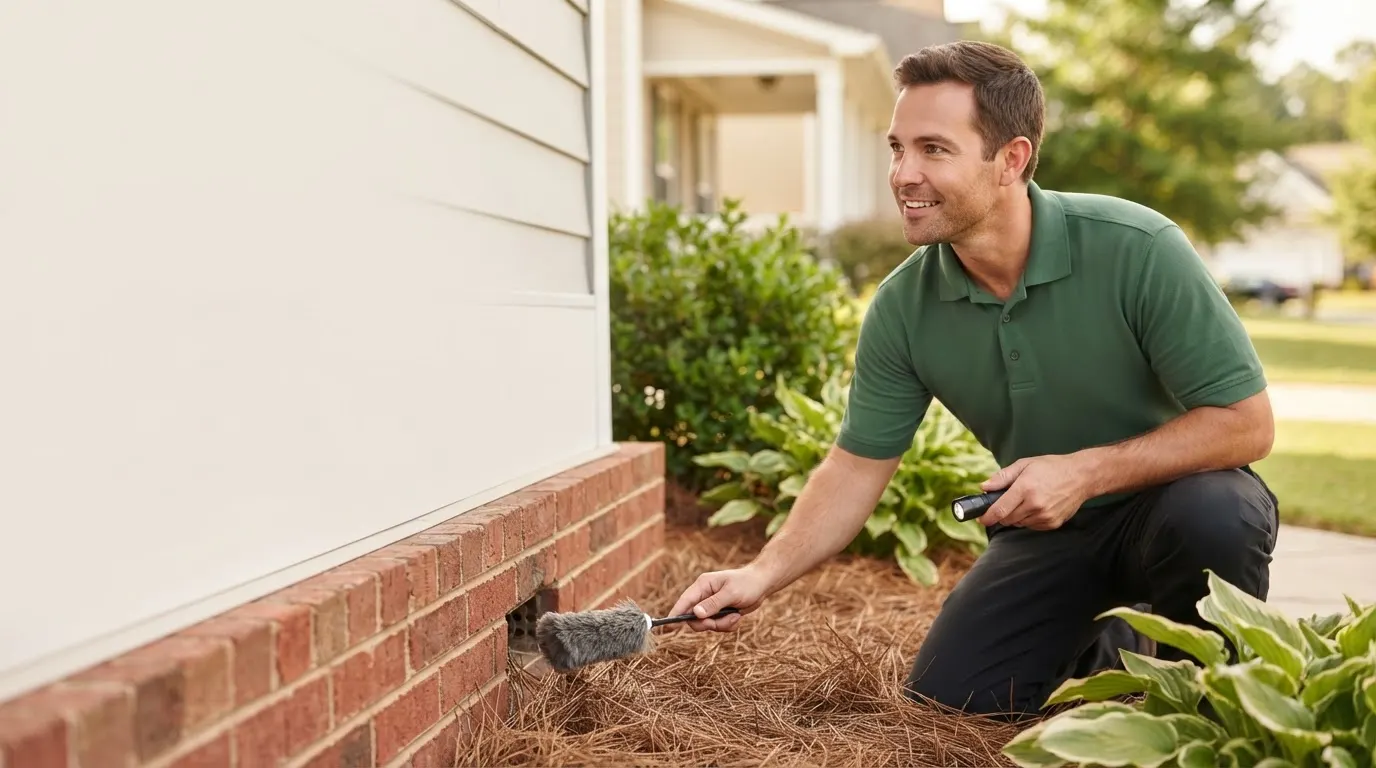
Pest Control Service in columbia is an integrated biological, mechanical, and chemical mitigation discipline that halts wood-destroying, structural, and health-threatening invertebrate and vertebrate pests across Midlands properties.
Every service reflects the same meticulous attention to detail, whether it's a single job or a larger pest control service project across columbia.
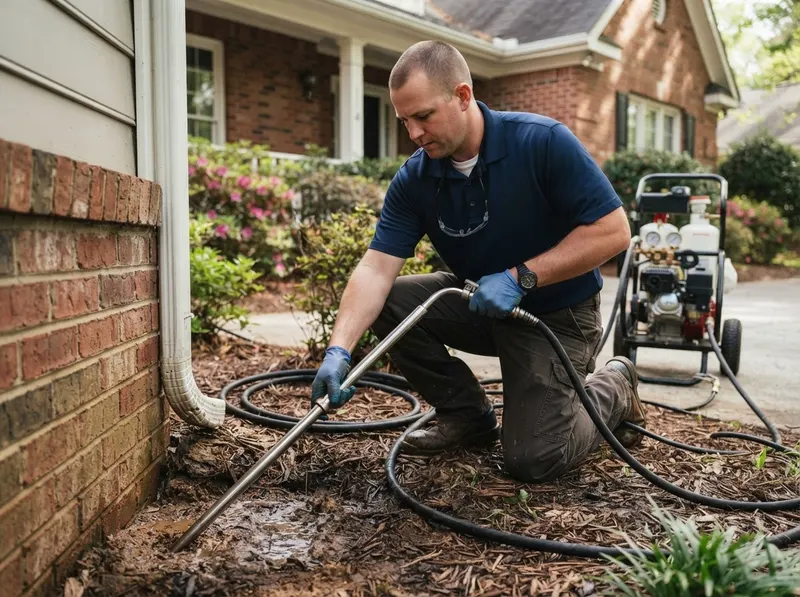
Continuous liquid soil applications target subterranean termites along inner and outer foundation perimeters, hollow block piers, and plumbing slabs. Using non-repellent liquid termiticides complying with the EPA Pesticide Safety Standards , technicians dig 6-inch by 6-inch trenches adjacent to foundation footings, saturating soil at the regulated rate of 4 gallons per 10 linear feet per foot of depth. This method allows subterranean workers to pass through treated soil without detection, collecting micro-doses that transfer throughout the subterranean colony through mutual grooming and food sharing. Slab penetrations, expansion joints, and attached brick steps undergo specialized vertical rod injections to create a contiguous defensive envelope that prevents termites from bypassing treated soil zones. Soil trenching delivers structural defense against moisture-dependent colonies, safeguarding sill plates, subfloor framing, and interior drywall studs from structural consumption without releasing offensive chemical odors into the home.
Get a quote →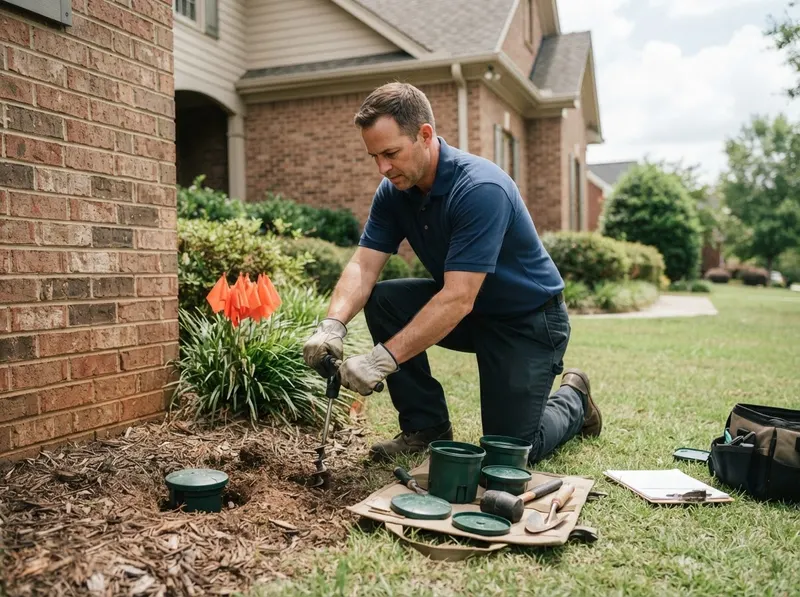
Targeted termite baiting networks establish an exterior monitoring grid around the perimeter to detect and destroy active colonies before they breach sill plates. Technicians position heavy-duty polymer bait cylinders flush with the turf every 10 to 12 feet, placing them in zones displaying elevated soil moisture, decomposing tree roots, or older pine mulch beds. These stations utilize cellulose matrices loaded with slow-acting chitin synthesis inhibitors, allowing foraging termite workers to ingest the compound and distribute it through trophallaxis to the nest. The active agent halts the molting cycle, causing widespread colony collapse while avoiding initial bait shyness or repellent avoidance. Stations remain monitored and refilled according to structural preservation protocols outlined by the National Pest Management Association , ensuring continuous year-round ground surveillance that avoids landscape trenching or concrete core drilling.
Get a quote →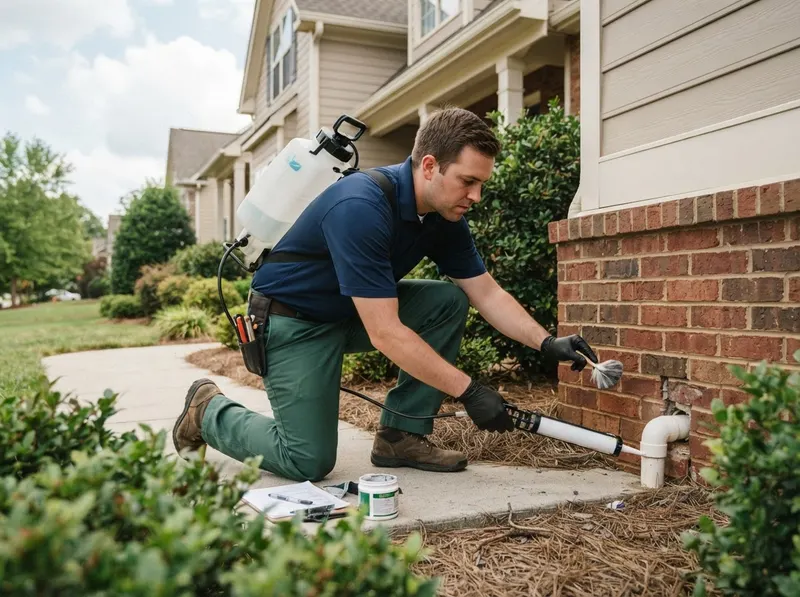
Scheduled perimeter maintenance establishes an unbroken chemical and mechanical buffer around the home envelope, repelling invasive crawling insects before they access living quarters. Technicians direct microencapsulated liquid pyrethroid formulations across foundation masonry 3 feet vertically and outward 5 feet horizontally over soil, rock, and mulch borders. This liquid band bonds tightly to porous red clay, brick, and foundation stucco, creating a crystalline residual that withstands ultraviolet degradation and summer rain. Technicians pair this chemical barrier with mechanical exclusion, sealing utility line openings, repairing foundation weep screening, and clearing spider webbing and wasp nests from eaves, porch soffits, and window architraves. Focusing applications on exterior surfaces keeps chemical residues outside the home, protecting indoor air purity and shielding structural framing from recurring ant, cockroach, and earwig migrations.
Get a quote →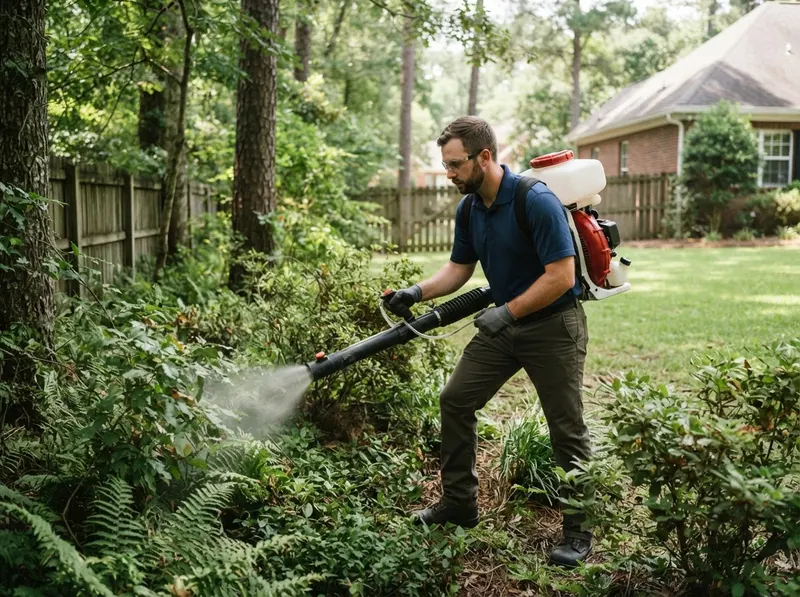
Specialized outdoor vector suppression protocols target adult resting harborage and aquatic larval nurseries across turf, groundcover, and ornamental trees. High-powered backpack mist blowers distribute micronized droplets of synthetic pyrethroids bound with polymeric sticking agents directly onto the undersides of broadleaf landscape plants, dense ivy beds, and shaded eave recesses where vector mosquitoes rest during daytime heat. Technicians treat bird baths, catch basins, corrugated downspout extensions, and low-lying landscape swales with solid mineral briquettes containing Bacillus thuringiensis israelensis or pyriproxyfen, systematically interrupting larval pupation as recommended by the CDC Mosquito Control Guidelines . This dual-action strategy prevents biting adult swarms, mitigates vector-borne transmission risks, and maintains residential yard accessibility throughout Midlands summer humidity.
Get a quote →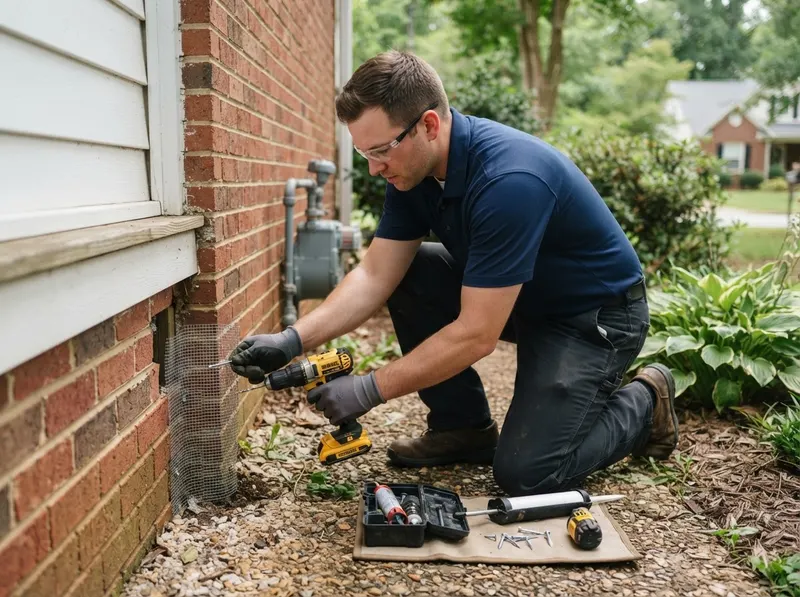
Comprehensive rodent proofing isolates conditioned living areas, basements, and attic voids from intrusive Norway rats, roof rats, and house mice. Technicians inspect roof ridges, fascia corners, crawl space vents, and air conditioning line chases, identifying gnaw marks, grease rubs, and structural entry gaps. Technicians seal all apertures larger than 0.25 inches using heavy-gauge rust-resistant galvanized steel wire mesh, copper mesh packing, and structural polyurethane expanding foams reinforced with particulate barriers. Indoors, technicians position locked, tamper-resistant mechanical traps within non-living voids and subfloor crawl paths to trap entrenched populations without introducing rodenticides that risk indoor carcass decay. This non-chemical exclusion protocol aligns with safety guidelines set by the OSHA Worker Safety Regulations , delivering permanent structural isolation and protecting attic insulation, flex ducting, and electrical wiring from gnawing and contamination.
Get a quote →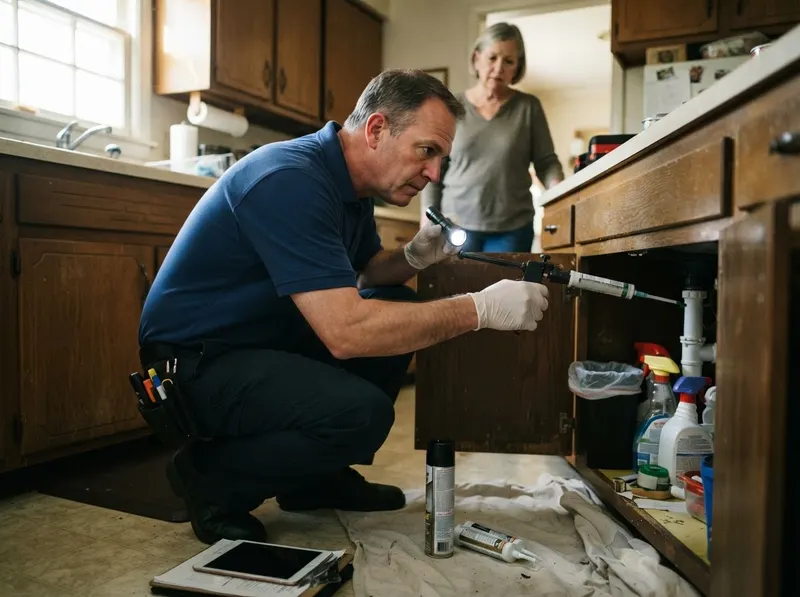
Intensive indoor German cockroach remediation uses targeted, non-broadcast cleanout techniques to clear structural harborage in kitchens, breakrooms, and bathrooms. Technicians apply non-volatile bait matrices containing dynamic active ingredients such as indoxacarb or dinotefuran directly into cabinet hinges, drawer glides, electrical chase plates, and motor housings beneath refrigeration units. Technicians supplement these placements with insect growth regulators that disrupt juvenile nymph development and cause adult sterility, terminating the continuous reproductive cycle. Strategic monitoring traps track population drops across structural junctions, avoiding widespread aerosol applications that can scatter pests deeper into wall cavities and plumbing chasms. This approach adheres to the sanitation and containment standards established by the U.S. Department of Housing and Urban Development for healthy residential environments.
Get a quote →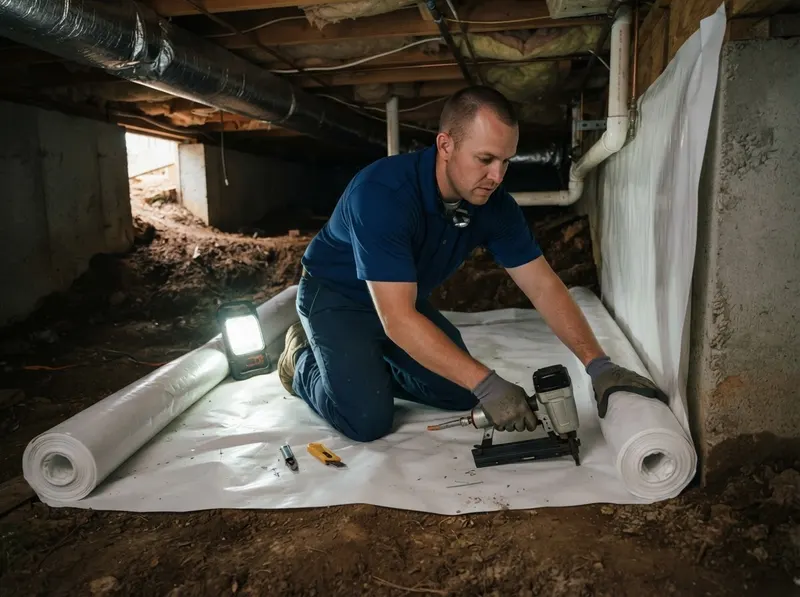
Targeted subfloor environmental management suppresses moisture levels that encourage wood-destroying insect infestations and timber-decay fungi. Technicians level the crawl space grade, extract organic debris, and install a continuous 12-mil to 20-mil reinforced virgin polyethylene vapor retarder across exposed ground, overlapping seams by 12 inches and sealing edges directly to brick or masonry foundation piers. Foundation vents receive airtight insulating covers, while commercial crawl space dehumidification systems extract airborne water vapor to maintain structural timber moisture content safely below 19%, in alignment with the USDA Natural Resources Conservation Service soil moisture management guidance. This environmental intervention halts the development of wood-boring powderpost beetles, stops subterranean termite shelter tube construction, and prevents dry rot, securing floor joists, sills, and subfloors from structural decay.
Get a quote →Direct nest treatment and physical elimination protocols neutralize stinging insects, such as paper wasps, baldfaced hornets, and subterranean yellowjackets, from structural perimeters and pedestrian walkways. Technicians deploy targeted, fast-acting aerosolized knockdown agents and directional dusts directly into subterranean burrow apertures, under-soffit comb clusters, and structural wall voids, wearing protective gear to prevent retaliatory stinging incidents. Once the colony is neutralized, technicians detach physical nests and scrape away residual pheromone bonding pads to prevent secondary wasp recruitment. Technicians treat adjacent structural soffits, shutter gaps, and louvered attic vents with microencapsulated repellent sprays to deter new queens from building nests during spring emergence, preventing outdoor stings for residential occupants.
Get a quote →You get a firm, itemized quote for your pest control service before any work begins, no surprises, no pressure.
Careful prep, tidy work, and a full cleanup when we are done. We treat your home and belongings like our own.
The same trusted, background-checked team from the first call to the final check.
Choosing the proper structural pest protocol requires evaluating building architecture, soil permeability, grading slope, and target pest biology. When subterranean termites threaten structural framing through foundation settlement cracks or brick pier voids, property owners must weigh continuous liquid perimeter trenching against in-ground bait station installations. A liquid trench creates an immediate, unbroken zone of treated soil saturated with fipronil or imidacloprid, providing fast-acting lethal contact as workers travel between the soil and structural timbers; however, this approach requires extensive soil excavation, pavement drilling through carports or patios, and periodic soil re-treatment after severe Midlands rain deluges.
In contrast, an in-ground bait system using hexaflumuron or noviflumuron insect growth regulators requires minimal physical disruption to brick paths or established landscaping, intercepting termite foragers through subterranean feeding grids and sharing the slow-acting chitin synthesis inhibitor with the queen; the trade-off is an extended eradication timeline, often taking 60 to 120 days to achieve complete colony elimination compared to the immediate perimeter knock-down of liquid termiticides. When mitigating crawling nuisance pests such as smokeybrown cockroaches, Argentine ants, and Carolina wolf spiders, homeowners must decide between quarterly exterior barrier maintenance and reactive indoor spot treatments. A dedicated exterior protocol applies microencapsulated suspension sprays, granular insect baits, and mechanical caulking along weep screeds, crawl space access hatches, and exterior electrical penetrations, systematically halting entry before pests enter walls or conditioned living spaces; the trade-off demands disciplined exterior groundskeeping, including clearing pine straw, pulling mulch beds 12 inches away from the foundation line, and trimming overhanging live oak and sweetgum branches to eliminate arboreal bridges.
For properties bordering the Congaree, Broad, or Saluda rivers that encounter aggressive seasonal mosquito and biting midge surges, deciding between automated misting lines and scheduled backpack blower foliage applications involves operational and environmental trade-offs. Automated misting lines deliver daily programmatic bursts of short-lived pyrethrins along fence rails, providing continuous adult suppression; however, they require recurring line pressurization, nozzle unclogging, and risk over-spraying non-target beneficial pollinators. Backpack mist barrier applications, deployed every 21 to 28 days, coat the undersides of broadleaf shrubs and groundcovers with bonded polymer solutions resistant to summer thunderstorms while incorporating microbial larvicides into standing drainage areas, ensuring higher chemical stability and localized accuracy with zero plumbing maintenance.
Every project gets a firm, written price after a free on-site visit. Ranges below for orientation.
Tell us about your pest control service job and we'll send a clear, written quote, usually the same day. Or just call and talk to a real columbia pro.
(803) 887-7917
The fall line geology of Columbia mixes dense red clay with sandy river runoff, driving subterranean termite swarms early every spring near the Columbia Canal and Riverfront Park. Historic residences throughout Earlewood, Cottontown, and Shandon feature brick pier crawl spaces that retain moisture during humid summer months, creating prime harborage conditions for smokeybrown cockroaches and wood-destroying beetles. Heavy seasonal runoff along the Congaree river basin elevates water tables across low-lying sections of Olympia and Rosewood, saturating foundation footings and encouraging Argentine ant colonies to scale brick exteriors and enter wall framing. Additionally, the historic, mature tree canopies of Heathwood and Forest Acres drop heavy organic leaf litter onto low-slope rooflines, generating damp organic decay zones that draw roof rats, carpenter ants, and paper wasps toward attic overhangs. RiverCrest Bug Control tailors every intervention to these specific geological and architectural challenges, deploying foundation-drying systems, non-volatile perimeter soil barriers, and structural exclusion hardware matched to local brick, mortar, and crawl space configurations. Homeowners can reach our field diagnostics desk by calling (803) 887-7917 to confirm a property survey.
Free estimates for columbia & the surrounding area.
 RiverCrest Bug Control