Managing Solenopsis invicta across the Midlands demands an ecological protocol rather than routine surface spraying. Red imported fire ant turf eradication in Columbia balances perimeter safety with subterranean…
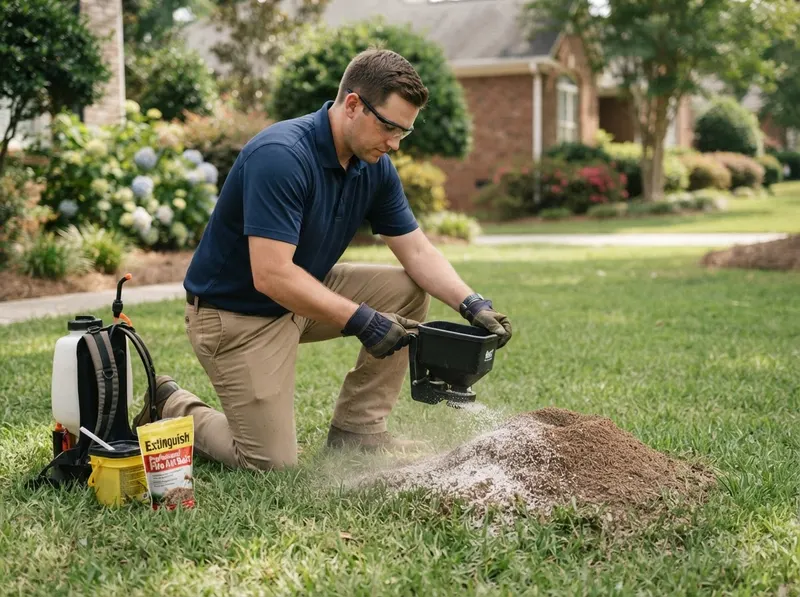
Managing Solenopsis invicta across the Midlands demands an ecological protocol rather than routine surface spraying. Red imported fire ant turf eradication in Columbia balances perimeter safety with subterranean disruption to safeguard properties from Shandon to Elmwood Park. The sandy loam soil prevalent near South Carolina Department of Natural Resources river basins allows fire ant queens to establish deep brood chambers up to five feet underground during hot summer stretches. Broadcast applications utilizing an Environmental Protection Agency registered insect growth regulator stop reproductive cycles by preventing pupae from maturing into sterile workers, while individual mound injections neutralize active defenders around high-traffic play areas.
Property size dictates the treatment framework across varied Columbia microclimates. For suburban lots under one-half acre in Forest Acres or Rosewood, granular baiting paired with liquid injection delivers targeted resolution. Conversely, multi-acre parcels bordering native brush near Congaree National Park require calibrated broadcast spreaders delivering products vetted by the Clemson University Cooperative Extension Service. The trade-off between contact insecticides and biological baits involves speed versus sustainability: surface liquid contacts knock down foraging workers immediately but leave subterranean queens intact, whereas specialized baits leverage natural food-sharing behaviors to collapse the entire colony infrastructure without saturating home lawns with unnecessary chemicals.
Precise application timing prevents material loss and protects local aquatic ecosystems. Rain events common along the State of South Carolina river valleys wash away unstabilized surface treatments, so applications occur exclusively when turf is dry and soil temperatures exceed 65 degrees Fahrenheit. Technicians coordinate applications around regional guidance from the USDA Animal and Plant Health Inspection Service federal quarantine rules, ensuring treatments satisfy environmental standards established by the South Carolina Department of Environmental Services. Homeowners avoid recurring chemical contracts by deploying an annual or bi-annual treatment schedule that maintains a protective, eco-conscious defensive boundary around turf perimeters.
Every job gets a firm, written price after a free on-site visit.
Tell us about your red imported fire ant turf eradication job in columbia and we'll send a clear, written quote, usually the same day.
 RiverCrest Bug Control